
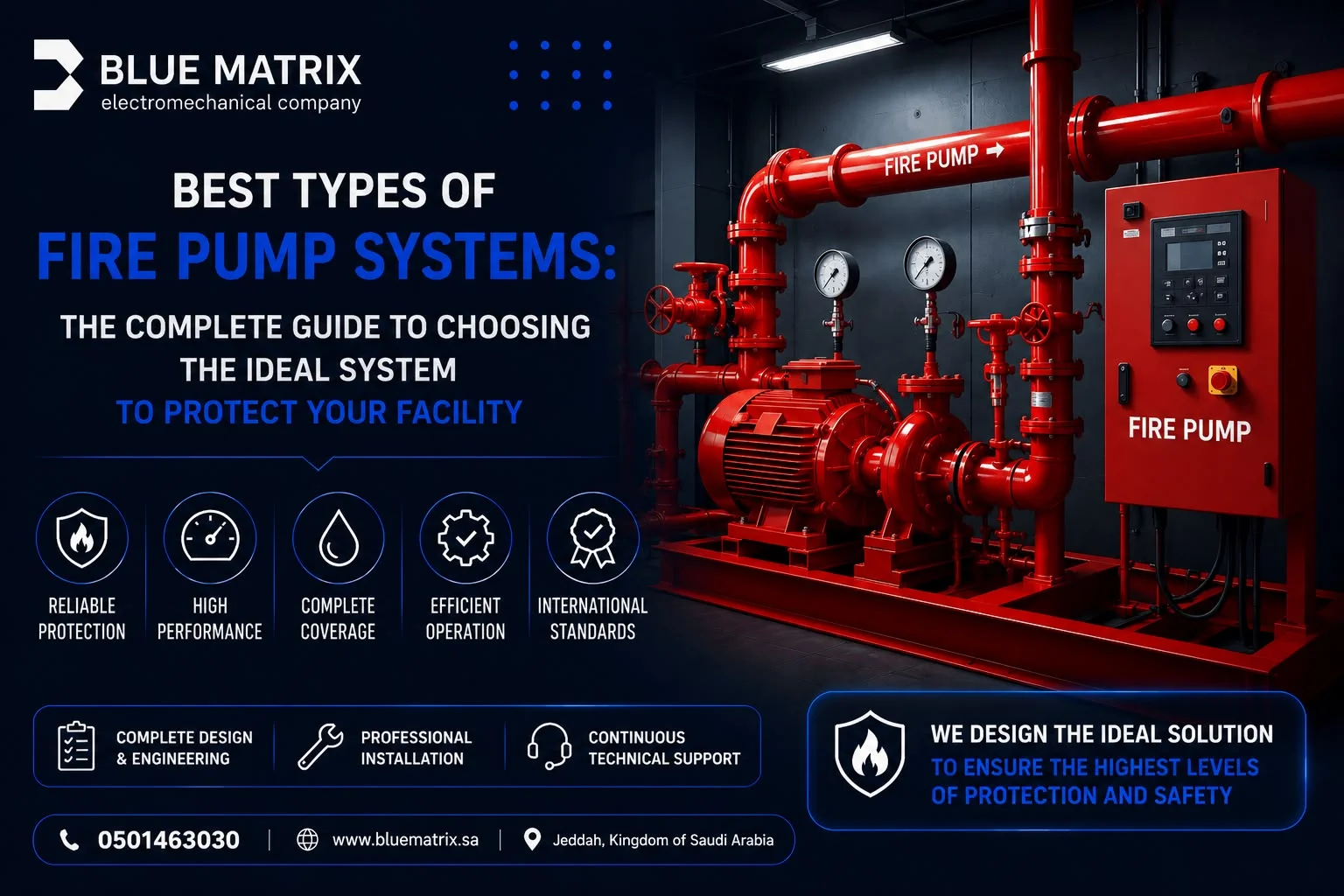
Best Types of Fire Pumps are the backbone of any effective fire protection system. They are primarily responsible for delivering a continuous supply of water at the required pressure and flow rate to control and extinguish fires before they escalate. With the wide variety of residential, commercial, and industrial facilities, one essential question arises: Which type of fire pump is best for your application? This guide provides a comprehensive answer based on the latest international and local standards, focusing on technical specifications and key selection factors to help you make the right decision for protecting lives and property.
The Importance of Fire Pumps in Fire Protection Systems
Before exploring the different types, it is important to understand the critical role Best Types of Fire Pumps play within a fire protection system. A fire pump serves as the heart of the system by drawing water from storage tanks or primary water sources and delivering it at high pressure through piping networks to automatic sprinklers, hose reels, and fire hydrants.
Without a reliable fire pump, even the highest-quality fire protection components cannot perform effectively. A properly designed and certified fire pump system also ensures compliance with Saudi Civil Defense requirements and international standards such as NFPA 20, UL, and FM approvals. Choosing the right pump is therefore not just a technical decision it is a strategic investment in business continuity and life safety.
Main Types of Fire Pumps
Best Types of Fire Pumps are classified based on their operating principle, impeller design, and power source. Below are the most widely used fire pump types worldwide and throughout Saudi Arabia.
1. Centrifugal Fire Pumps
Centrifugal fire pumps are the most commonly used pumps in fire protection systems due to their ability to deliver consistent water flow at high pressure. They operate using centrifugal force generated by a rotating impeller that pushes water toward the discharge outlet.
Key advantages:
- High efficiency for medium to high flow rates.
- Relatively simple design that simplifies maintenance.
- Stable pressure suitable for large commercial and industrial facilities.
- Available in capacities ranging from 50 GPM to 5,000 GPM.
Best applications:
- Commercial complexes and logistics warehouses.
- Manufacturing plants and industrial facilities.
- High-rise buildings requiring continuous hydraulic pressure.
2. Electric Fire Pumps
Electric fire pumps are powered by electric motors and are the standard choice for facilities with reliable electrical service. They offer quiet, clean, and efficient operation compared to diesel-driven pumps.
Key advantages:
- Automatic start when system pressure drops.
- Lower operating costs compared to diesel pumps.
- Less maintenance due to the simplicity of electric motors.
- Ideal for residential buildings, commercial properties, hospitals, and schools.
Limitations:
- Depend entirely on electrical power and may become inoperative during power outages unless supported by backup power systems.
3. Diesel Fire Pumps
Diesel fire pumps are commonly installed as the primary backup fire pump or as the main pump where reliable electricity is unavailable. They operate independently using a diesel engine, ensuring continuous operation during electrical failures.
Key advantages:
- Complete independence from the electrical grid.
- Excellent durability and long operating periods.
- Ideal for remote sites, industrial facilities, and large warehouses.
- Comparable pressure and flow performance to electric pumps.
Operational considerations:
- Require a dedicated fuel tank and exhaust system.
- Need regular engine maintenance, including oil and fuel filter replacement.
4. Jockey Pumps
A jockey pump is not a primary fire pump. Instead, it is a small auxiliary pump designed to maintain system pressure by compensating for minor leaks and preventing unnecessary operation of the main fire pump.
Key advantages:
- Keeps the fire protection system pressurized and ready for immediate response.
- Reduces wear on the primary fire pump.
- Maintains system pressure within the desired operating range.
Typical specifications:
- Flow rate equal to approximately 10–15% of the main pump capacity.
- Operating pressure slightly higher than the main fire pump to ensure it activates only when necessary.
5. Vertical Turbine Fire Pumps
Vertical turbine fire pumps are specifically designed for deep water sources such as underground tanks and wells. Their impeller and vertical shaft remain submerged, making them ideal where municipal water pressure is insufficient.
Key advantages:
- Excellent performance when drawing water from deep sources.
- No priming required because the impeller remains submerged.
- Saves floor space since the motor is mounted above ground.
Best applications:
- Facilities supplied by private wells or underground reservoirs.
- Airports, ports, and large industrial complexes.
6. Horizontal Split Case Fire Pumps
Horizontal split case pumps are among the most reliable solutions for heavy-duty fire protection applications. Their casing is split horizontally, allowing easy maintenance without disconnecting the piping system.
Key advantages:
- Excellent hydraulic balance that minimizes vibration and noise.
- Easy inspection and maintenance.
- Flow capacities up to 5,000 GPM with pressures reaching 490 PSI.
- Ideal for high-rise buildings and large commercial developments.
7. Vertical Split Case Fire Pumps
Vertical split case pumps combine the compact footprint of vertical pumps with the maintenance advantages of split-case construction. They require minimal floor space, making them ideal for compact pump rooms.
Key advantages:
- Space-saving vertical configuration.
- Flow rates ranging from 50 to 750 GPM.
- Operating pressures up to 205 PSI.
- Suitable for medium-sized residential and commercial buildings.
Integrated Fire Pump Systems
In large-scale and mission-critical facilities, relying on a single fire pump is not enough. Instead, integrated fire pump systems are installed to ensure maximum reliability and continuous protection. The most common configurations include:
Dual System (Electric + Jockey Pump)
This configuration consists of one main electric fire pump and a jockey pump that maintains system pressure. It is commonly used in residential and commercial buildings with moderate fire protection requirements.
Dual System (Diesel + Jockey Pump)
This setup combines a diesel-driven main fire pump with a jockey pump. It is ideal for facilities where electrical power is unreliable or prone to outages.
Triple System (Electric + Diesel + Jockey Pump)
Considered the most comprehensive and dependable configuration, this system includes a primary electric fire pump, a standby diesel fire pump, and a jockey pump to maintain network pressure. It is typically required for critical facilities such as hospitals, airports, power plants, and data centers.
International and Local Standards for Fire Pumps
When selecting the best fire pump for your facility, it is essential to ensure compliance with recognized industry standards, including:
- NFPA 20: The National Fire Protection Association standard governing the installation of stationary fire pumps, covering design, installation, testing, and performance requirements.
- UL (Underwriters Laboratories): Certification confirming that the pump has successfully passed rigorous safety and performance testing.
- FM Approved (Factory Mutual): An internationally recognized approval demonstrating the pump’s reliability under critical operating conditions.
- Saudi Civil Defense Requirements: Fire pumps must comply with local regulations and be incorporated into an approved fire protection system design.
Choosing pumps that carry these certifications ensures dependable performance, regulatory compliance, and reduced insurance risks.
How to Choose the Right Fire Pump for Your Facility
Selecting the appropriate fire pump depends on several interconnected factors.
1. Building Type and Size
- Residential buildings: Typically require an electric fire pump with a jockey pump.
- Commercial buildings: May require either a dual or triple pump system depending on building height and occupancy.
- Industrial facilities: Usually demand high-capacity centrifugal or vertical turbine fire pumps.
2. Available Water Supply
- Where a reliable municipal water supply exists, electric or horizontal split-case pumps are generally sufficient.
- If water is supplied from underground tanks or deep wells, vertical turbine fire pumps are the preferred solution.
3. Power Supply Reliability
- Facilities with stable electrical infrastructure can rely primarily on electric fire pumps.
- Sites exposed to frequent power interruptions should include a diesel backup pump for uninterrupted protection.
4. Required Flow Rate and Pressure
Fire protection engineers determine the required flow rate (GPM) and pressure (PSI or Bar) based on:
- Building size and number of floors.
- Type of sprinkler system installed.
- Hazard classification of the protected area.
5. Available Pump Room Space
- Horizontal pumps require larger floor space.
- Vertical pumps save valuable space but may require pits or deeper installations.
Fire Pump Pricing Factors
The investment required for a fire pump system depends on several key considerations.
- Horsepower and Flow Capacity: Higher horsepower (HP) and greater flow rates (GPM) increase equipment costs.
- Driver Type: Diesel-driven pumps generally cost more than electric pumps because of the engine, fuel system, and exhaust components.
- Certifications: UL-listed and FM-approved pumps carry higher prices but are essential for compliance and long-term reliability.
- System Configuration: Triple pump systems (Electric + Diesel + Jockey) represent the highest level of protection and investment.
- Installation Requirements: Piping, control panels, valves, and installation work often account for a significant portion of the total project cost.
Professional Tip: Never select a fire pump based solely on price. A low-cost, non-certified pump may fail during an emergency, potentially causing losses far exceeding the initial savings.
Preventive Maintenance and System Readiness
A reliable fire protection system depends not only on proper installation but also on regular maintenance. Professional maintenance programs typically include:
- Weekly inspections: Manual pump operation to verify normal performance and identify unusual noises or leaks.
- Monthly inspections: Checking system pressure, diesel fuel level, coolant, batteries, and related components.
- Annual performance testing: Full-load testing in accordance with NFPA 25 procedures.
- Engine maintenance: Scheduled oil changes, fuel filter replacement, and air filter servicing as recommended by the manufacturer.
Preventive maintenance extends equipment life while ensuring immediate and reliable operation during a fire emergency.
Why Choose Blue Matrix for Fire Pump Systems?
Blue Matrix is one of Saudi Arabia’s leading providers of fire pump systems, delivering complete solutions that cover engineering design, equipment supply, installation, commissioning, and ongoing maintenance. Every project is executed in full compliance with local regulations and international fire protection standards.
Why Work with Blue Matrix?
- Proven Industry Experience: Successful delivery of fire protection systems for commercial complexes, industrial facilities, hospitals, educational institutions, and other critical infrastructure.
- Full Standards Compliance: Strict adherence to NFPA, UL, FM, and Saudi Civil Defense requirements.
- Experienced Engineering Team: Certified engineers and technicians with extensive expertise in hydraulic system design and fire pump selection.
- Tailored Solutions: Every project is evaluated individually to provide the most efficient system based on performance, available space, and budget.
- Professional Preventive Maintenance: Scheduled maintenance programs that keep your fire protection system fully operational year-round.
- Continuous Technical Support: Responsive after-sales service and ongoing technical assistance.
Learn more about Blue Matrix’s complete fire protection solutions and integrated fire pump systems.
Conclusion
Fire pumps are the foundation of every reliable fire protection system. Understanding the different types of fire pumps and their technical characteristics enables you to select the most suitable solution for your facility while ensuring compliance, operational reliability, and long-term safety. Whether your project requires a simple electric pump or a fully integrated fire pump system, Blue Matrix can support you from engineering design through installation and preventive maintenance.
Frequently Asked Questions
What is the best type of fire pump for large commercial buildings?
Horizontal or vertical split-case centrifugal fire pumps are generally the preferred choice for large commercial buildings due to their high flow capacity and dependable performance. Critical facilities typically require a triple pump configuration consisting of electric, diesel, and jockey pumps.
Can an electric fire pump be used without a diesel backup?
For smaller residential or commercial buildings with reliable electrical service, an electric pump combined with a jockey pump may be sufficient. However, critical and industrial facilities generally require a diesel standby pump to comply with fire safety regulations.
What is the difference between a jockey pump and the main fire pump?
A jockey pump maintains system pressure by compensating for minor pressure losses and preventing unnecessary operation of the main fire pump. The main fire pump supplies the high-pressure water flow required during an actual fire emergency.
Which certifications should I look for when purchasing a fire pump?
Look for compliance with NFPA 20, UL Listing, FM Approval, and applicable Saudi Civil Defense requirements. Reviewing the manufacturer’s performance curve is also essential to verify hydraulic suitability.
How often should fire pumps be serviced?
Fire pumps should undergo weekly inspections, monthly maintenance checks, and annual full-load performance testing. Diesel engines also require scheduled oil and filter replacement according to the manufacturer’s maintenance intervals.
Does building height affect fire pump selection?
Yes. Taller buildings require higher discharge pressure to deliver sufficient water to upper floors. High-rise structures may require multi-stage pumps or booster pump systems.
What factors determine the cost of a fire pump?
Pricing depends on horsepower, flow capacity, pump driver (electric or diesel), international certifications, system configuration, and installation requirements such as piping, controllers, and accessories.
Can a used fire pump be installed in a new project?
It is generally not recommended unless the pump has been thoroughly inspected and performance-tested by qualified specialists. New construction projects should use certified new equipment to ensure compliance and long-term reliability.
What is the expected lifespan of a fire pump?
With proper preventive maintenance, fire pumps typically last 20 to 30 years. Diesel engines may require major overhauls after approximately 10 to 15 years, depending on operating hours.
Where can I get professional advice on selecting the right fire pump system?
A qualified fire protection specialist can evaluate your project’s hydraulic requirements and recommend the most appropriate solution. Blue Matrix provides complete consulting, supply, installation, and maintenance services for certified fire pump systems designed to the highest international standards.