
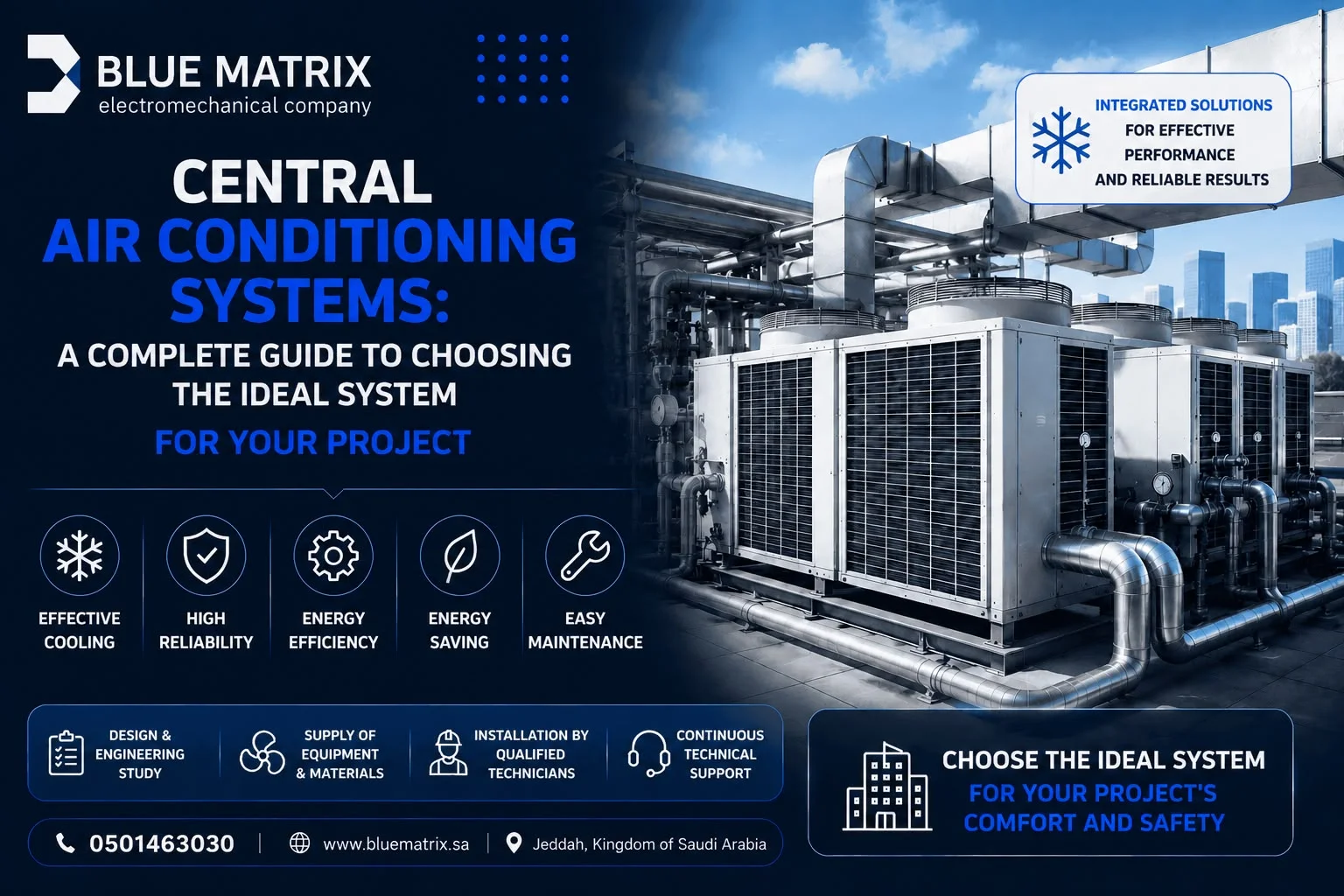
Central air conditioning systems are a fundamental component of creating comfortable indoor environments in residential, commercial, and industrial buildings. With the wide variety of Heating, Ventilation, and Air Conditioning (HVAC) technologies available today, selecting the right system has become an important engineering decision that directly impacts energy consumption, indoor air quality, and long-term operating costs. This guide provides an in-depth technical overview of the most common HVAC system types, along with a practical comparison table and the most common mistakes to avoid when selecting a system.
What Are Central Air Conditioning Systems?
Central air conditioning systems are integrated climate control solutions that condition air within a central unit before distributing it throughout the building via insulated ductwork. These systems typically consist of key mechanical components, including the compressor, evaporator, condenser, and circulation fan, as well as Air Handling Units (AHUs) and Fan Coil Units (FCUs) in certain system configurations.
One of the major advantages of central HVAC systems is their ability to deliver large volumes of conditioned air—measured in Cubic Feet per Minute (CFM)—while maintaining exceptionally low indoor noise levels. Since the primary equipment is usually installed in mechanical rooms or on rooftops, occupants enjoy a quieter indoor environment. These systems can also be integrated with Fresh Air Ventilation Systems to improve indoor air quality by supplying fresh outdoor air while removing odors and airborne contaminants.
Main Types of Central Air Conditioning Systems
1. Concealed Ducted Split System (Ducted Split)
The concealed ducted split system is one of the most popular HVAC solutions for luxury villas and high-end residential developments. The indoor unit is hidden above the suspended ceiling, while conditioned air is distributed through discreet ceiling diffusers.
Key Advantages:
- Elegant appearance with concealed equipment
- Very low indoor noise levels
- Excellent compatibility with modern interior designs
- Centralized temperature control for each zone unless a zoning system is installed
2. Variable Refrigerant Flow (VRF / VRV) System
VRF/VRV technology represents one of the most advanced HVAC solutions available today. It regulates the amount of refrigerant delivered to each indoor unit based on the actual cooling demand, making it ideal for smart buildings requiring independent temperature control in multiple rooms.
Key Advantages:
- Significant energy savings compared to many conventional systems, depending on system design and operating conditions
- Individual temperature control for each indoor unit
- Multiple indoor unit styles connected to a single outdoor unit
- High flexibility for commercial and residential applications
3. Chilled Water System (Chiller)
Chiller systems are typically the preferred solution for large-scale facilities such as hospitals, hotels, shopping malls, and commercial towers. Instead of distributing refrigerant directly, the system cools water in a central chiller plant before circulating it through Air Handling Units (AHUs) or Fan Coil Units (FCUs).
Key Advantages:
- Exceptional cooling capacity for large buildings
- Long service life, often exceeding 25 years
- Flexible expansion for future building developments
- Excellent performance in large commercial projects
4. Packaged Unit System
A packaged unit combines all major HVAC components into a single cabinet, usually installed on the rooftop. It is commonly used for warehouses, mosques, exhibition halls, and other large open spaces.
Key Advantages:
- Lower initial investment
- Faster installation
- High cooling capacity
- Simple maintenance
However, packaged units offer less flexibility for zoning and require sufficient rooftop installation space.
5. Air-Cooled System
Air-cooled HVAC systems use ambient outdoor air to remove heat from the condenser instead of relying on water. They are particularly suitable for regions with limited water availability and dry climates.
Key Advantages:
- No cooling tower required
- Reduced water consumption
- Lower maintenance costs than water-cooled systems
- Reliable performance in dry environments
Quick Comparison of Central Air Conditioning Systems
| System | Best Application | Initial Cost | Energy Efficiency | Noise Level | Zoning Capability | Maintenance |
| Concealed Ducted Split | Villas, Luxury Apartments | Medium | Good | Very Low | Limited | Easy |
| VRF / VRV | Villas, Offices, Hotels | High | Excellent | Very Low | Full Individual Control | Moderate |
| Chiller | Hospitals, Shopping Malls, High-Rise Buildings | Very High | Excellent | Low | Central with Zoning | Complex |
| Packaged Unit | Warehouses, Mosques, Showrooms | Low | Moderate | Moderate | Limited | Easy |
| Air-Cooled | Medium-Sized Buildings, Dry Regions | Medium | Good | Low | Centralized | Moderate |
Main Components of a Central Air Conditioning System
Understanding the primary components of a central HVAC system is essential when selecting the right solution for your project.
- Outdoor Unit: Houses the compressor and condenser.
- Indoor Unit: Contains the evaporator coil and circulation fan.
- Ductwork: Insulated air ducts engineered to deliver airflow at calculated CFM rates.
- Air Diffusers and Grilles: Distribute conditioned air throughout occupied spaces.
- Air Filters: Improve indoor air quality by removing dust and airborne particles.
- Thermostat: Controls system operation based on the desired indoor temperature.
Factors to Consider When Choosing the Right Central Air Conditioning System
Selecting the ideal HVAC system depends on several critical factors that directly impact performance, efficiency, and long-term operating costs.
1. Building Size and Application
The type of building plays a major role in determining the most suitable HVAC solution.
- Residential homes and villas: Concealed Ducted Split or VRF systems.
- Commercial buildings: VRF or Air-Cooled systems.
- Large-scale developments: Chiller systems are often the preferred choice.
2. Heat Load Calculation
A precise Heat Load Calculation is essential to determine the required cooling capacity, typically measured in Tons of Refrigeration (TR). Relying on rough estimates often results in oversized or undersized systems, leading to unnecessary energy consumption or inadequate cooling performance.
3. Energy Efficiency
Look for systems with a high SEER (Seasonal Energy Efficiency Ratio) or Saudi SEEC Energy Efficiency Rating. Higher efficiency ratings translate into lower electricity consumption and reduced operating expenses.
4. Zoning Requirements
If individual temperature control is required for each room or office, a VRF system is usually the best option. For buildings requiring uniform cooling throughout, other central HVAC systems can provide an effective solution.
5. Interior Design and Space Considerations
Concealed systems such as Ducted Split and VRF maintain a clean architectural appearance by hiding indoor equipment above suspended ceilings, preserving the building’s interior aesthetics.
Common Mistakes When Choosing a Central Air Conditioning System
Avoiding these common mistakes can save thousands of dollars in future maintenance and energy costs while extending the lifespan of your HVAC system.
- Selecting insufficient cooling capacity: Undersized systems run continuously, consume more energy, and shorten compressor life.
- Choosing based solely on price: Low-cost systems that fail to meet required specifications often result in higher repair costs and increased utility bills.
- Ignoring thermal insulation: Poor insulation significantly increases cooling loads and forces the HVAC system to work harder.
- Skipping heat load calculations: Random estimates frequently produce systems that are either undersized or excessively oversized.
- Hiring inexperienced installers: Poor ductwork installation can result in air leakage of up to 30%, dramatically reducing system efficiency.
- Neglecting Fresh Air Ventilation: Insufficient outdoor air supply leads to stale indoor air, odor buildup, and elevated carbon dioxide levels.
The Importance of Preventive Maintenance
Proper installation alone is not enough. Preventive maintenance is essential for maintaining system efficiency and reliability.
Monthly
- Clean or replace air filters.
- Check airflow rates (CFM).
Quarterly
- Inspect refrigerant charge.
- Check ductwork for air leakage.
Annually
- Clean evaporator and condenser coils.
- Inspect motors and electrical components.
- Calibrate thermostats and control systems.
Every 3–5 Years
- Perform professional duct cleaning to remove accumulated dust, bacteria, and contaminants.
Blue Matrix: Your Trusted Partner for Complete Central HVAC Solutions
Blue Matrix is one of Saudi Arabia’s leading providers of central air conditioning systems and integrated MEP (Mechanical, Electrical & Plumbing) solutions. Combining extensive engineering expertise with precise execution, the company delivers customized HVAC systems tailored to residential, commercial, and industrial projects.
Why Choose Blue Matrix?
Proven Industry Experience
A successful portfolio of residential villas, commercial complexes, healthcare facilities, and educational institutions.
Complete Engineering Solutions
From heat load calculations and mechanical design to equipment supply, installation, testing, and commissioning.
Commitment to Quality Standards
All work is performed according to internationally recognized safety, energy efficiency, and engineering standards.
Specialized Engineering Team
Certified HVAC engineers and technicians with extensive experience across all major air conditioning technologies.
Professional Preventive Maintenance
Comprehensive maintenance programs designed to maximize system performance while minimizing unexpected breakdowns.
On-Time Project Delivery
Strict adherence to project schedules without compromising workmanship or quality.
Discover our complete MEP engineering solutions and request a free technical consultation for your next project.
How to Choose the Right Central Air Conditioning Contractor
Before signing a contract, make sure your HVAC contractor meets the following requirements:
- Demonstrated experience with projects similar in size and complexity.
- Certified mechanical engineers capable of performing accurate heat load calculations and HVAC design.
- Comprehensive engineering studies rather than relying on rough capacity estimates.
- Clear installation warranties covering both workmanship and installed equipment.
- Ongoing maintenance programs and reliable after-sales technical support.
Conclusion
A central air conditioning system is a long-term investment that extends beyond indoor comfort to improve air quality and reduce energy consumption. Achieving the best results depends on accurate heat load calculations, selecting the appropriate HVAC technology, and working with experienced engineering specialists. By avoiding common design and installation mistakes while following a regular maintenance schedule, you can ensure reliable performance and maximize the lifespan of your HVAC system.
Frequently Asked Questions
What is the best central air conditioning system for residential villas?
Concealed Ducted Split and VRF systems are generally the preferred choices for villas because of their quiet operation and clean appearance. Larger luxury villas often benefit from VRF systems due to their room-by-room temperature control.
What is the difference between central air conditioning and split air conditioners?
Central HVAC systems condition air in a single central unit and distribute it throughout the building using ductwork. Split air conditioners require a separate indoor unit for each room and typically provide less integrated climate control.
Are central air conditioning systems energy efficient?
Yes. High-efficiency systems such as VRF and Chiller installations can significantly reduce energy consumption. Look for high SEER or SEEC ratings when selecting equipment.
How much does a central air conditioning system cost?
Installation costs depend on building size, system type, and required cooling capacity. Packaged Units generally have the lowest upfront cost, while VRF and Chiller systems require a larger initial investment.
How long does a central HVAC system last?
With proper maintenance, most systems have a service life of 15 to 25 years, while well-maintained water-cooled chiller systems may exceed 30 years.
Can a central air conditioning system be installed in an existing building?
Yes, provided there is sufficient space for ductwork, suspended ceilings, and mechanical equipment. In buildings with limited ceiling space, VRF systems often provide a practical alternative.
What routine maintenance is required?
Regular maintenance includes cleaning filters, checking refrigerant levels, cleaning evaporator and condenser coils, inspecting water pumps in chiller systems, and calibrating thermostats.
Does central air conditioning improve indoor air quality?
Yes. Modern HVAC systems include advanced filtration and can be upgraded with HEPA filters or integrated Fresh Air Ventilation Systems to further improve indoor air quality.
What causes weak airflow in a central HVAC system?
Common causes include clogged filters, leaking ductwork, malfunctioning fans, or low refrigerant levels. A comprehensive HVAC inspection is recommended to identify the root cause.
Where can I get professional advice on selecting a central HVAC system?
Consult experienced HVAC specialists to evaluate your project’s cooling requirements. Learn more about Blue Matrix‘s integrated air conditioning and MEP engineering solutions to find the ideal system for your facility.